
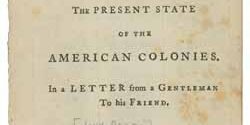
 John Adams’ treatise called “Thoughts on Government,” published in April of 1776, was really a response to Thomas Paine’s Common Sense. As David McCullough has written:
“Friends in Massachusetts reported to Adams that because of Common Sense, the clamor for a declaration of independence was never greater.… In a letter to Abigail… Adams said he expected Common Sense to become the ‘common faith….’ But Adams was not without misgivings. The more he thought about it, the less he admired Common Sense. The writer, he told Abigail, ‘has a better hand at pulling down than building.’”
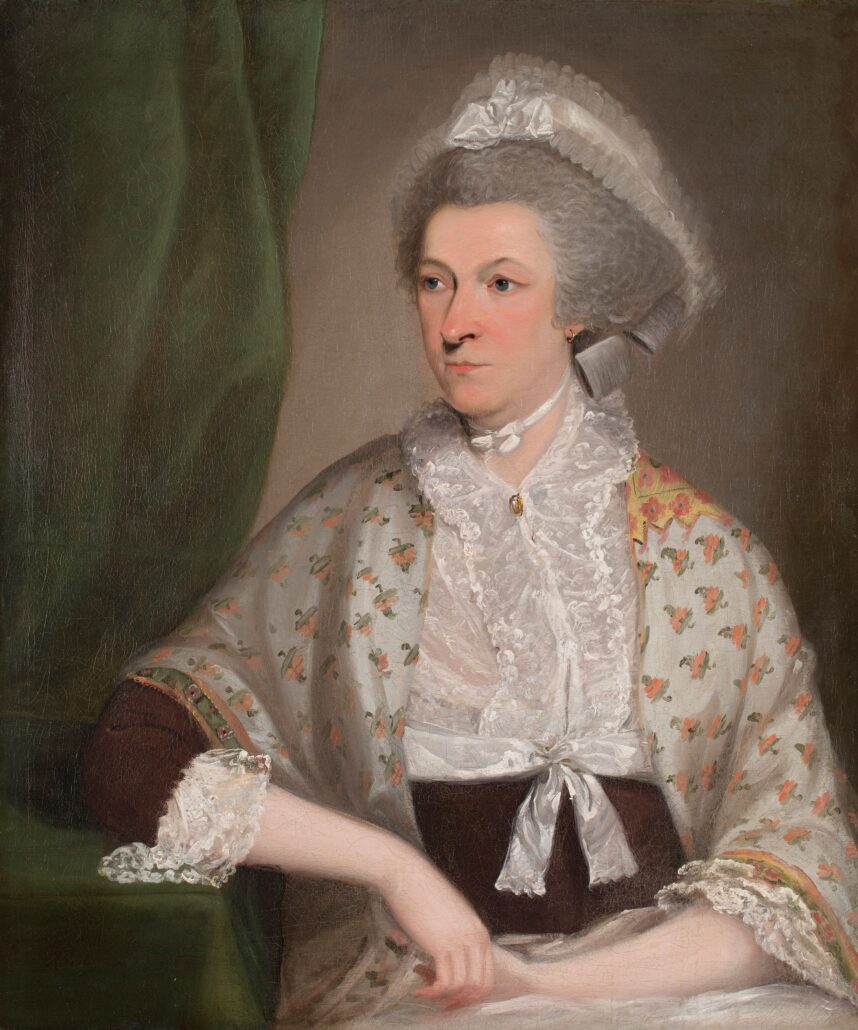 Though Adams’ treatise in general was an answer to Paine, its immediate catalyst was Congressman William Hooper. Hooper, as McCullough writes, “before returning home to help write a new constitution for North Carolina, had asked Adams for a ‘sketch’ of his views.” That sketch became known as “Thoughts on Government,” given in a letter to Hooper. Adams’ ideas on building a government that can both curb tyranny and place checks on the dangers of pure democracy was greatly needed. Abigail had written to John the year before with these ideas:
“I am more and more convinced that man is a dangerous creature, and that power whether vested in many or few is ever-grasping… the great fish swallow up the small and he who is most strenuous for the rights of the people, when vested with power, is as eager after the prerogatives of government. You tell me of degrees of perfection to which human nature is capable of arriving, and I believe it, but at the same time lament that our admiration should arise from the scarcity of the instances.”
In writing to John Penn and later to George Wythe, Adams expressed his understanding of the momentous time they were in by the Providence of God:
“It has been the Will of Heaven, that We should be thrown into Existence at a Period, when the greatest Philosophers and Lawgivers of Antiquity would have wished to have lived: a Period, when a Coincidence of Circumstances, without Example, has afforded to thirteen Colonies at once an opportunity, of beginning Government anew from the Foundation and building as they choose. How few of the human Race, have ever had an opportunity of choosing a System of Government for themselves and their Children? How few have ever had any Thing more of Choice in Government, than in Climate? These Colonies have now their Election and it is much to be wish’d that it may not prove to be like a Prize in the Hands of a Man who has no Heart to improve it.”
 Keep in mind that a declaration of rights at the state level served as a charter, and its constitution as bylaws or the due process by which rights are protected. The major points in Adams’ thesis served as a template for the new state constitutions. Adams wrote:
“WE ought to consider, what is the end of government, before we determine which is the best form. Upon this point all speculative politicians will agree, that the happiness of society is the end of government, as all Divines and moral Philosophers will agree that the happiness of the individual is the end of man. From this principle it will follow, that the form of government, which communicates ease, comfort, security, or in one word happiness to the greatest number of persons, and in the greatest degree, is the best.” [emphasis added]
But what is the true root of happiness? Is it feelings, as many are prone to say today? Virtue was defined at the time to mean “moral goodness; the practice of moral duties and the abstaining from vice, or a conformity of life and conversation to the moral law…. The practice of moral duties from sincere love to God and his laws.” John Adams declared in his thesis that “ALL sober enquiries after truth, ancient and modern, Pagan and Christian, have declared that the happiness of man, as well as his dignity, consists in virtue.” [emphasis added]
The question is then, what form of government is best to protect the virtue of the individual? Certainly not centralized control by civil government over an individual’s life! Adams goes on to say:
“They (writers such as Sidney, Harrington, Locke, Milton) will convince any candid mind, that there is no good government but what is Republican. That the only valuable part of the British constitution is so; because the very definition of a Republic, is ‘an Empire of Laws, and not of men.’ That, as a Republic is the best of governments, so that particular arrangement of the powers of society, or in other words that form of government, which is best contrived to secure an impartial and exact execution of the laws, is the best of Republics.” [emphasis added]
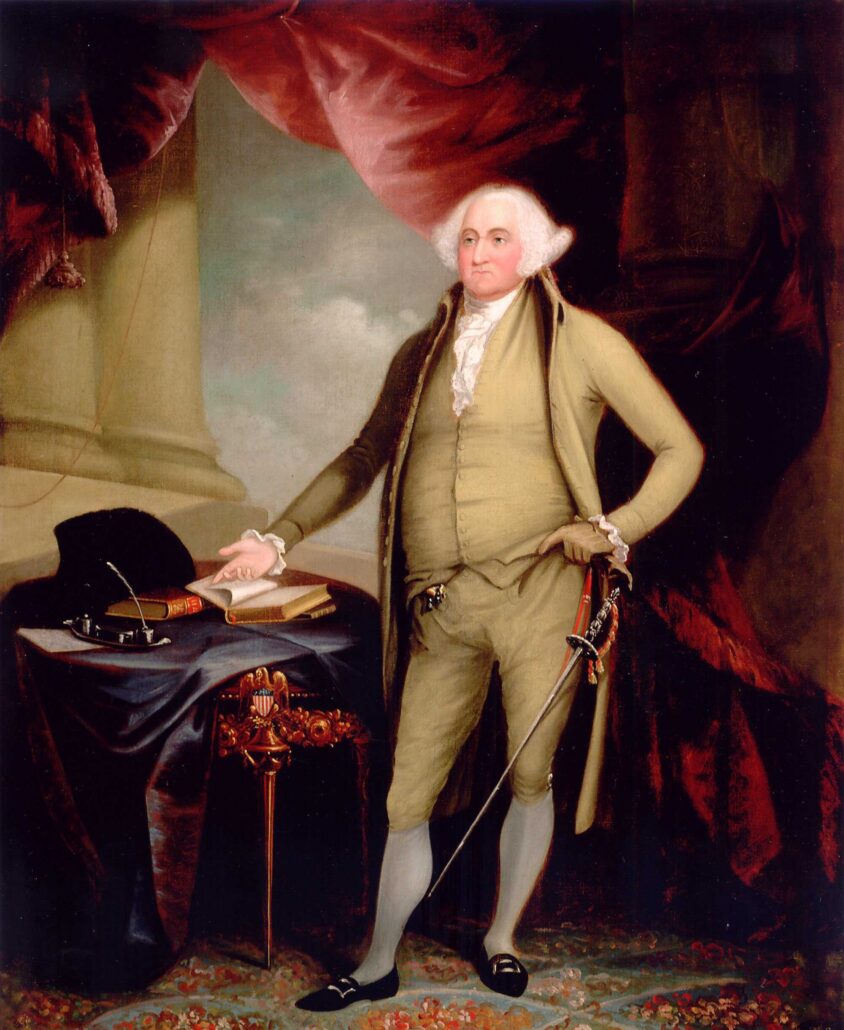 A “Representative Assembly” is the next ingredient Adams proposes. Here he delineates the need for the separation of powers – executive, legislative, and judicial, with a bicameral legislature (a house and a senate). To this, he adds that the proper administration of justice at the local level must be maintained. Impeachment and removal from office should take place for “misbehaviour” or not adhering to their oaths. In addition, individuals in each colony (or state) must be armed as a part of the militia.
Finally, “LAWS for the liberal education of youth, especially of the lower class of people, are so extremely wise and useful, that to a humane and generous mind, no expence for this purpose would be thought extravagant.” Education at taxpayer expense, including the teaching of Christian morals, was initially the notion of many framers, including Adams. This would change decades later, however, when true religious liberty from state control would be implemented.
Adams concludes, “A CONSTITUTION, founded on these principles, introduces knowledge among the People, and inspires them with a conscious dignity, becoming Freemen.” As the reader will note, these principles, including the importance of the education of youth in principles of morality, were embodied in most of the constitutions of the individual colonies. Due to John Adams’ studies of the Hebrew Republic in the Old Testament, it is probable that he based many of his views on the structure of the government of Ancient Israel before they chose a king.