
 In the North Carolina State Capitol building, there is a plaque that states that the Fourth Provincial Congress was to “concur with the delegates of other Colonies in declaring independency.”
John Adams sent his “Thoughts on Government” (recommending “republican principles”) in letter form to both William Hooper and John Penn, delegates from North Carolina who, along with Joseph Hewes, eventually signed the Declaration of Independence. North Carolina, through their delegates, directed all the colonies to unite and unanimously approve of a Declaration.
As the “North Carolina Manual,” published by the North Carolina Department of State, says:
“The resolves were the culmination of a year of discussions in conferences at the county level across the colony, and it was the first official action by a colony that called for severance of ties to Britain and independence for the colonies. They were unanimously adopted by the 83 delegates….”
The Resolves declared in part:
“…Taking into Consideration the usurpations and violences attempted… against America… and for the better defence of this province reported as follows….
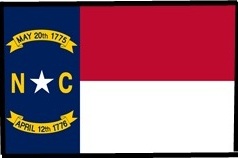 It appears to your Committee that pursuant to the Plan concerted by the British Ministry for subjugating America, the King and Parliament of Great Britain have usurped a Power over the Persons and Properties of the People unlimited and uncontrolled and disregarding their humble Petitions for Peace, Liberty and safety, have made divers Legislative Acts… destroying the People and committing the most horrid devastations on the Country….
And whereas the moderation hitherto manifested by the United Colonies and their sincere desire to be reconciled to the mother Country on Constitutional Principles, have procured no mitigation of the aforesaid Wrongs and usurpations and no hopes remain of obtaining redress by those Means alone which have been hitherto tried, Your Committee are of Opinion that the house should enter into the following Resolve, to wit
Resolved that the delegates for this Colony in the Continental Congress be impowered to concur with the other delegates of the other Colonies in declaring Independency, and forming foreign Alliances, resolving to this Colony the Sole, and Exclusive right of forming a Constitution and Laws for this Colony, and of appointing delegates… (to meet the delegates of the other Colonies for such purposes as shall be hereafter pointed out).”
Note the Resolves stated that Great Britain had usurped powers. They ignored the “petitions for peace” brought by the Colonies. They also made “legislative acts” beyond their power for the destruction of the people. Though the colonies attempted reconciliation and “redress,” it was to no avail. Finally, they declared independence and “formed a Constitution and Laws for this Colony” in unity with the other Colonies. It is clear that North Carolina followed the doctrine of the lower magistrate known as interposition. They did not move in lawless rebellion.
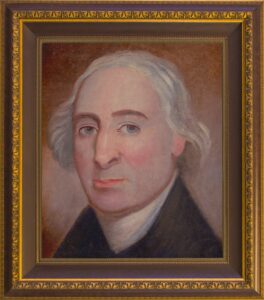 Copies of the Resolves were sent to William Hooper, Joseph Hewes, and John Penn, North Carolina delegates to the Continental Congress.
Born in Boston in 1742, Hooper was trained by James Otis, northern orator of the Revolution, after he left Harvard. Once in North Carolina, and passing the bar at a high level, he stood against insurrection. He represented Wilmington in 1773 where he, according to historian Nathaniel Dwight, “uniformly acted in opposition to oppression, and against turbulence, whether in rulers, or a heated populace.”
Elected as a delegate to the 1774 Continental Congress, and again in 1775, he was very active in maintaining the rule of law. Hooper signed the Declaration at 34 years of age. He died at 48, after having paid a price for liberty. Dwight writes of Hooper:
“Always ardent, and always active in supporting the cause he had espoused… (he) was peculiarly odious to English troops; … who… gave indulgence to their revenge…. While he was absent in Philadelphia… an English sloop of war… fired upon a dwelling house belonging to him.”
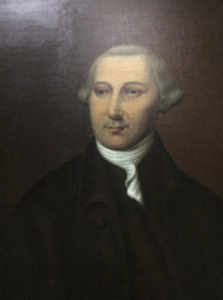 Joseph Hewes was born in New Jersey in 1730. Raised as a Quaker, he studied at Princeton, and then settled in Philadelphia, apprenticing as a merchant. After moving to North Carolina at 30, Dwight writes, his “probity in his dealings, his sobriety of deportment, his intelligence and address, early acquired for him the esteem and confidence of the inhabitants.” North Carolina was an early opponent of Great Britain’s tyrannical measures, and Hewes was a notable leader in the Continental Congress.
As a merchant, he paid the price for agreeing to the non-importation agreement, cutting off the profits he would have made for the sake of the principles of liberty. In 1775, he became the first secretary of the Navy. In 1776, at 46 years of age, he voted for independence. He died at 50, honored by many members of Congress attending his funeral.
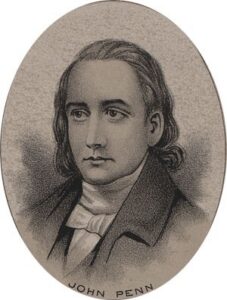 John Penn, born in Virginia in 1741, had only two or three years of formal schooling by 18. Though self-educated after losing his father, he was trained to resist, as Dwight writes, “the dangerous allurements of youth.” Utilizing the libraries of Richard Henry Lee, Patrick Henry, Peyton Randolph, and George Wythe, he prepared himself to practice law. At age 21 he was admitted to the bar. Dwight writes that “his eloquence was of that attractive kind, to which auditors always listen with peculiar satisfaction.”
He moved to North Carolina in 1774 and was elected to Congress in 1775. He voted for independence at 45 years of age. He had married in 1763, and with his wife, Susan, had three children, two dying before they were able to get married. A grateful nation watched him rise, as Dwight notes, “from obscurity to a distinguished mark among the great men of that memorable period.”
The first lesson we can learn from the Halifax Resolves is how North Carolina was inspired by the writings of John Adams to work for independence. This was true in many ways among all 13 colonies at the time. The second lesson is that the principles of liberty, drawn from the Bible and taught in the pulpits of colonial churches, provided a foundation that needed to be rehearsed.
Let us pray that such a united sentiment, drawn from the Scriptures, can be taught to our nation today, that we might restore our nation’s integrity and preserve our liberty and independence!